 English
 العربية

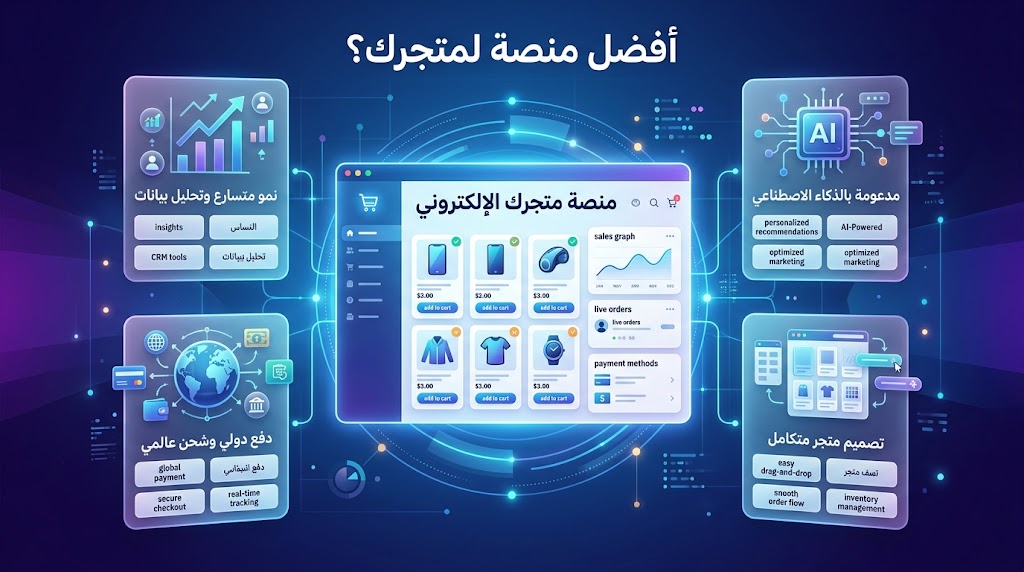
The best ecommerce platform is not the same for everyone.
Salla? Zid? Shopify? Tamqin Online? If you are searching for the best ecommerce platform in 2026, the most important question is not: Which platform is the best? It is: Which platform is best for my business, my market, and the way I operate?
In this guide, we compare the options based on market fit, payments, shipping, customization, cost, and scalability, so you can choose based on what your business actually needs rather than which platform has the loudest marketing.
If you're in a hurry, start here.
There is no single platform that wins at everything. Each option becomes a strong choice when it matches the business and market using it.
Salla
A strong option especially for merchants operating in Saudi Arabia who want an Arabic-first ecommerce ecosystem designed around local commerce.
Strong for the Saudi marketZid
A suitable option for businesses looking for an online store together with tools that support commerce operations, management, and growth.
Commerce and operationsShopify
A powerful global option for businesses that need international expansion, a large app ecosystem, integrations, and extensive customization.
Global expansionTamqin Online
A practical Arabic-first option, especially for businesses that need a simple and flexible experience with stronger alignment to the Yemeni market.
Local and flexibleDon't start with the platform name. Start with your business.
One of the most common mistakes is choosing a platform because of an attractive ad or beautiful theme. The real problems usually appear later, once the business starts selling.
You may discover that the payment method you need is unavailable, delivery is difficult to manage, adding a mobile app is expensive, or the customization you need is not possible.
Salla vs Zid vs Shopify vs Tamqin Online
We are not going to give every platform an arbitrary score out of 10. The useful question is: When does each platform make sense?
| Factor | Salla | Zid | Shopify | Tamqin Online |
|---|---|---|---|---|
| Best-fit market | Saudi Arabia | Saudi Arabia | Global markets | Yemen and selected Arabic markets |
| Ease of getting started | High | High | High | High and Arabic-first |
| Global expansion | Possible depending on business needs | Possible depending on business needs | Very strong | Depends on market and project requirements |
| Local integrations | Strong in Saudi Arabia | Strong in Saudi Arabia | Depends on apps and service providers | Strong focus on practical needs in Yemen |
| Customization | Good within the platform ecosystem | Good within the platform ecosystem | Very extensive | Flexible with optional development services |
| Best suited for | Saudi merchants wanting a ready-to-use platform | Saudi merchants focused on operations and growth | Brands aiming for international scale | Yemeni or Arabic businesses needing flexibility |
Where will you sell? Your market changes the answer.
A platform can be excellent globally but inconvenient if it does not fit local payments and delivery. The opposite is also true: an excellent local platform may not be the first choice for a business targeting dozens of countries.
Saudi Arabia
If Saudi Arabia is your main market, give significant weight to local payment gateways, shipping companies, taxes, and the services Saudi merchants use every day.
Start by comparing Salla, Zid, and relevant alternativesYemen
In Yemen, local payment options, cash on delivery, flexible delivery management, and organized customer information may matter more than having thousands of apps you will never use.
Local market fit becomes criticalGlobal Markets
If you are targeting multiple countries, focus on currencies, languages, international shipping, apps, integrations, and the ability to customize the shopping experience.
This is where global platforms become strongerThe cheapest subscription does not always mean the cheapest store.
When comparing ecommerce platforms, it is easy to focus only on the monthly subscription fee. But the subscription is only one part of the real operating cost.
The better question is: How much will the complete store cost once I start using it seriously?
Monthly or annual plans and what happens when you need a higher tier.
The theme, branding, or customizations your store requires.
Some functionality may require additional paid tools.
Include payment gateway and transaction-related costs.
Shipping, inventory, accounting, marketing, and other systems.
A mobile app, custom features, or larger systems as the business expands.
Ask how much the full ecommerce operation will cost during the next 12 months if the business succeeds and starts requiring more features.
What happens when your store succeeds?
A store receiving twenty orders a month is very different from one processing thousands. That is why you should not choose a platform based only on what you need during the first week.
Ask these questions early:
- Does the platform provide an API or ways to connect external systems?
- Can you add Android and iPhone apps?
- Can it connect to inventory or ERP systems?
- Can it support branches or advanced operations?
- Can products, customers, and orders be exported?
- What are the customization limits if your business model changes?
A simple rule
Start with the simplest platform that can serve your current needs, but avoid choosing one that will force you to rebuild everything as soon as the business starts growing.
Has AI become a factor when choosing an ecommerce platform?
Artificial intelligence is increasingly becoming part of ecommerce, from product descriptions and marketing to customer service, analytics, automation, and product discovery.
But do not choose a platform just because it has the letters “AI” on a features page. The better question is whether the platform is flexible enough to work with new tools and external services as your needs evolve.
Still unsure? Choose based on your situation.
These are not absolute rules, but they are a much better starting point than choosing a platform based only on brand recognition.
15 questions to ask any ecommerce platform.
If you do not know the answers to these questions, you have not really compared the platforms yet — you have only compared their marketing pages.
Payments, shipping, and currency — not just account registration.
Understand the true cost of every sale.
Your domain is part of your digital business identity.
Products, customers, and orders matter if you ever move platforms.
Can you build an experience beyond the standard templates?
Important when connecting the store to other systems and services.
And how much will it cost and how will it be managed?
Especially when there is a payment or order-related issue.
The important thing is whether your customers actually use them.
Can you use your own couriers or delivery company?
Titles, descriptions, URLs, product pages, and technical controls.
Branches, inventory, CRM, ERP, apps, and integrations.
A small feature may require another monthly subscription.
Read the terms and understand what happens to your data.
Calculate what your store will need when it grows, not only on day one.
Is Tamqin Online the best choice for everyone? No.
If your business is highly international and depends on a very large ecosystem of global applications and integrations, Shopify may be closer to what you need.
If your entire focus is on the Saudi market, it makes sense to seriously include Salla and Zid in your comparison.
If you operate in Yemen or want a flexible Arabic-first solution that is easy to manage, with the option to access additional services such as mobile apps and custom development when needed, Tamqin Online is worth trying and comparing for yourself.
This comparison is only the beginning.
If you are still choosing your ecommerce platform, these guides will help you make a more informed decision.
Short answers before you choose.
Common questions business owners ask when comparing ecommerce platforms.
What is the best ecommerce platform in 2026?
There is no single platform that is best for everyone. Define your target country, payment and shipping requirements, customization needs, and growth plans, then compare platforms based on those factors.
Salla vs Zid: which is better?
Both are important options in the Saudi market. The better choice depends on your operations, integrations, pricing plans, and the features your specific business needs.
Is Shopify better than Arabic ecommerce platforms?
Not always. Shopify is powerful for global expansion and customization, while a local platform may be easier and more suitable for payments, delivery, and local services in your country.
What is the best ecommerce platform in Yemen?
Focus on whether the platform supports local payment options, cash on delivery, delivery management, Arabic support, and easy order management in the Yemeni market.
Should I choose the cheapest ecommerce platform?
Not necessarily. Compare the total operating cost, including apps, add-ons, payment costs, design, development, and future expansion.
Do I need a developer to build an ecommerce store?
Not necessarily. Ready-made ecommerce platforms allow you to launch without building the entire system from scratch. Custom development becomes useful when your requirements go beyond what the platform offers.
Can I change ecommerce platforms later?
Yes, but the difficulty depends on how easily you can export products, customers, orders, domains, and integrations. It is better to think about migration before your store becomes very large.
Do I need a mobile app for my ecommerce store?
Not necessarily from day one. A mobile app becomes more valuable when you have repeat customers, loyalty programs, notifications, and frequent customer usage.
Don't choose your ecommerce platform from an ad.
Create a trial store on Tamqin Online, add your first product, explore the dashboard, and decide for yourself whether the experience fits your business.
Start for Free →
Comments
الاسعار كم حقكم
Add New Comment